
A steel foundry is a metal casting facility that specializes in producing steel components. Raw steel is heated in a furnace until it becomes molten, then poured into a precisely engineered mold. When the metal solidifies and is removed from the mold, the result is a cast steel part or component used across industries, from infrastructure and energy to heavy equipment and defense.
How Does a Steel Foundry Work?
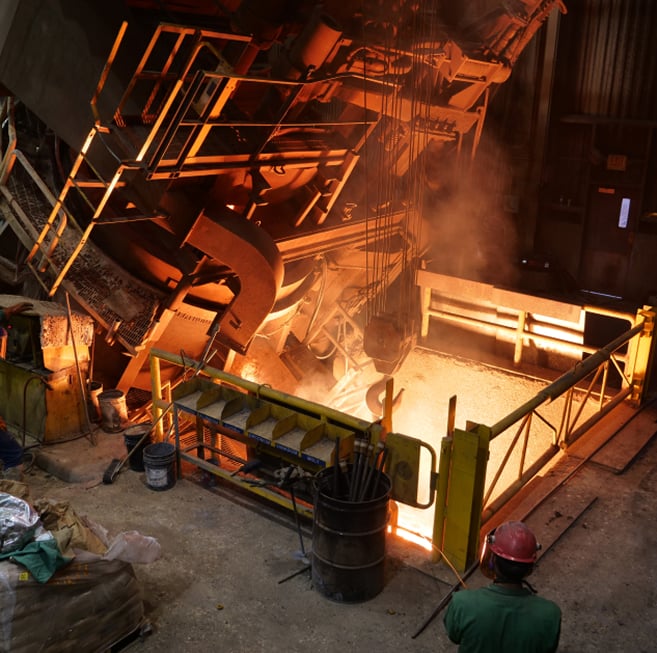
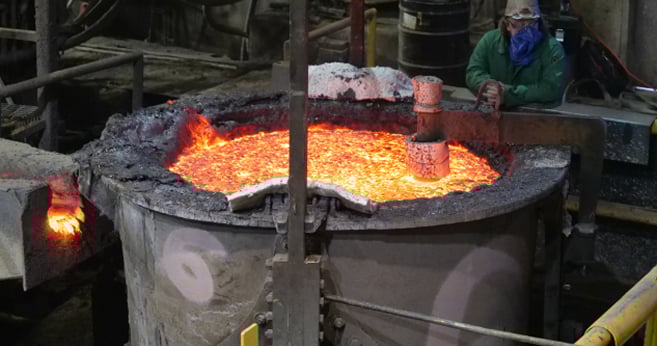
Steel foundries rely on electric arc furnaces to melt raw steel, heating it to roughly 2,850-2,950°F until it reaches a fully liquid state. At Harrison Steel Castings, our standard melt temperature is approximately 2,920°F, though the exact figure varies by alloy and application. Once molten, the steel can be refined, alloyed to specification, and poured into molds. Every stage of this process requires specialized equipment and rigorous safety protocols, from the furnaces themselves to the ladles and transfer vessels used to move molten steel through the facility.
What Can a Steel Foundry Produce?
A steel foundry produces steel castings: components cast from molten steel into shapes and sizes that other manufacturing methods often cannot achieve. Steel castings are found in infrastructure, mining, power generation, rail, defense, and heavy construction, among other industries. At Harrison Steel, our in-house machining capabilities allow us to deliver finished parts, not just rough castings, faster and more cost-effectively than foundries that outsource their machining.

What Materials Are Used in a Steel Foundry?
The primary material in a steel foundry is, unsurprisingly, steel, though the specific grade and alloy composition vary widely depending on the application. A single casting might require precise combinations of carbon, manganese, chromium, nickel, or other elements to meet the mechanical and chemical requirements of the finished part. Across the broader foundry industry, facilities may work with cast iron, aluminum, bronze, or other metals depending on their specialization. At Harrison Steel, our focus is steel. We process more than 50,000 tons of scrap steel every year, giving raw material a second life while continuously refining our processes to reduce our environmental footprint.

What Equipment Is Used in a Steel Foundry?
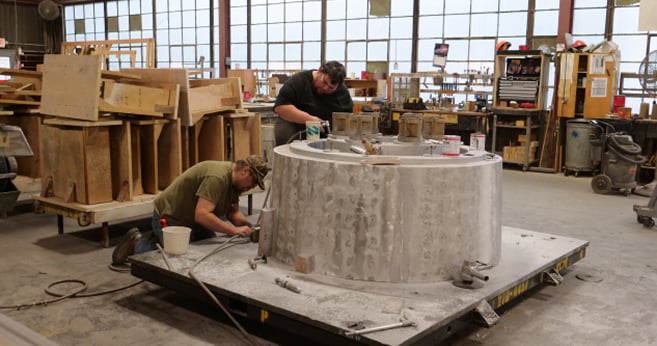
A steel foundry operates with a wide range of specialized equipment at every stage of the process. At Harrison Steel, the melt stage begins with three electric arc furnaces capable of both acid and basic melting practices. Ladles and transfer vessels move molten steel through the facility, while overhead cranes and conveyors handle material flow. Beyond the melt and pour, our semi-automated and floor molding lines use phenolic urethane molding to produce molds. Castings then move through shakeout, heat treatment (including water quenching), and finishing. On the machining side, our facility includes six Giddings & Lewis horizontal boring mills, multiple 5-axis machining and turning centers, and vertical turning machines with swings up to 84 inches, all supported by CNC programming through MasterCam. Dimensional verification is handled by Faro arms and PolyWorks Inspector software.
What Is the HSC Steel Foundry Process?
We work diligently with our customers up front to create a fair and accurate quote range for each project. Nobody likes price creep or surprises.
We use the most advanced three-dimensional engineering software available and hyper-detailed simulations that allow us to anticipate issues long before a part is ever cast. Mold designs and production processes are perfected from the start.
We bring a seasoned, skillful eye to the process in our full-scale commercial pattern shop, where our goal is a highly efficient, zero-defect product. We rigorously study the chemical and physical behavior of the metal alloys we use. Then we take all that scientific expertise and translate it into a consistently strong, durable final part for our clients.
We’re one of the only steel foundries in the country that uses shroud pouring, a tech-forward process that minimizes air entrainment and potential defects. The result is a cleaner and far-stronger casting.
Every part is inspected at the deepest, below-the-surface level to ensure consistency using our comprehensive nondestructive testing: wet/dry magnetic particle inspection, UT, gamma ray, and electro-optical dimension verification.
What Is It Like Working in a Steel Foundry?
A career in a steel foundry is ideal for people who take pride in what they do and aren’t afraid of a challenge. The casting process requires an army of diverse skills to move from concept to completion, from the deepest thinkers to the toughest workers. In short, we want people who see Harrison Steel the way we do: a hardworking, dedicated family producing a high-quality product. Sound like you? We offer our employees competitive wages, ongoing training, excellent benefits, and a place to sharpen and develop lifelong skills.